Trauma Therapy
-
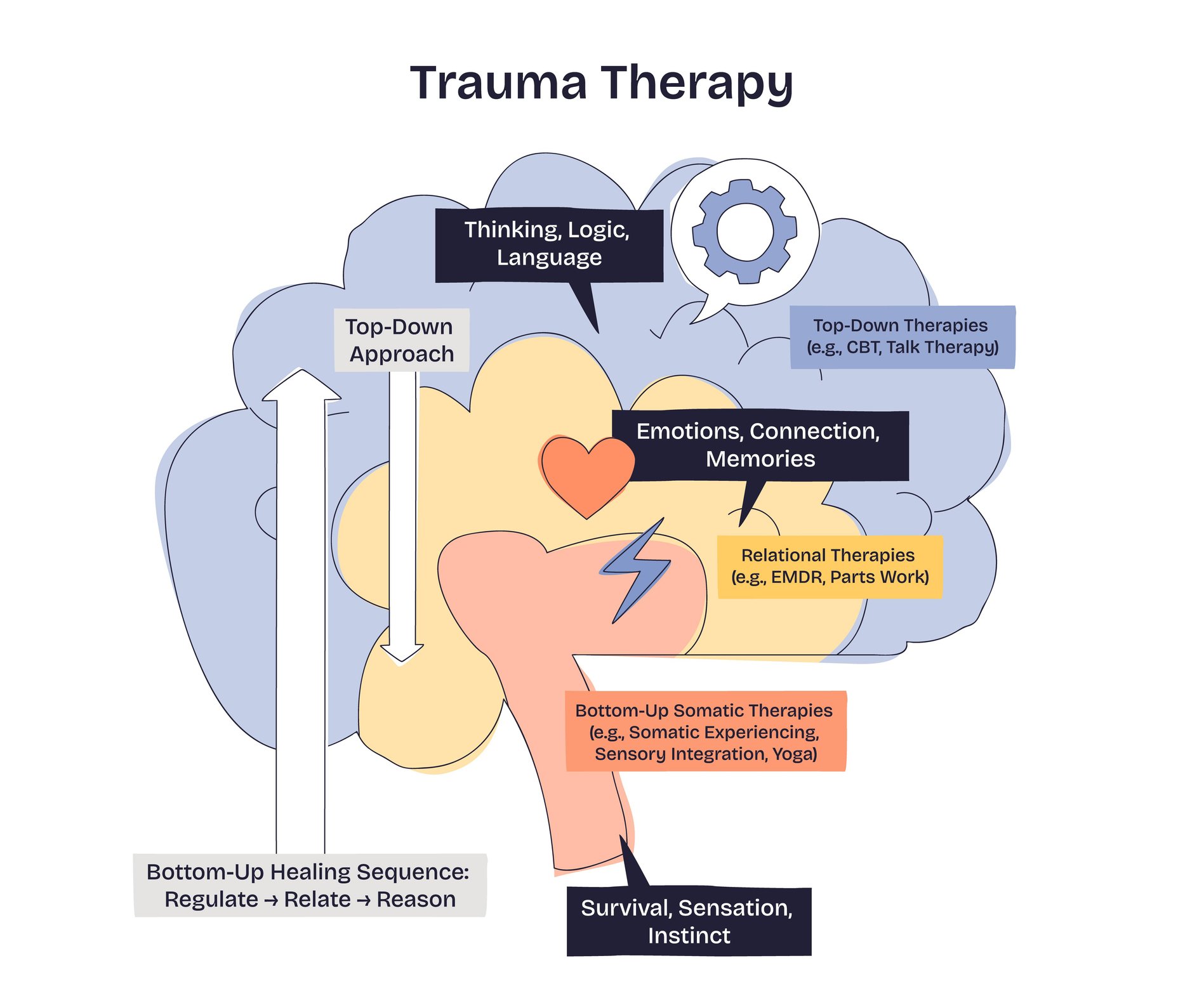
Trauma therapy is a specialized form of psychotherapy that helps people process overwhelming or distressing experiences while developing greater emotional resilience and nervous system regulation. Treatment is not simply about talking through what happened—it also focuses on helping you feel safer, more connected, and better able to respond to life's challenges in the present.
-
No. Trauma therapy is not about forcing you to relive painful experiences or share details before you're ready. We'll move at a pace that feels manageable and focus on building safety, stability, and coping skills before exploring difficult memories when appropriate.
-
Trauma can result from a single event or from repeated experiences over time. I work with individuals who have experienced:
Childhood trauma
Emotional neglect
Abuse
Medical trauma
Accidents and injuries
Grief and loss
Relationship trauma
Chronic stress
First responder or healthcare-related trauma
Other overwhelming life experiences
You do not need to have experienced a life-threatening event for your experiences to have a lasting impact.
-
Many people minimize their own experiences because others "had it worse." Trauma isn't defined only by what happened—it's also about how your mind, body, and nervous system responded. If your experiences continue to affect your relationships, emotions, or daily life, therapy may still be helpful.
While trauma therapy is effective for post-traumatic stress disorder (PTSD), many people seek treatment without meeting the criteria for PTSD. Therapy can also help with the effects of chronic stress, childhood adversity, relationship trauma, and other experiences that continue to influence your daily life.
-
Somatic Experiencing® (SE™) is a body-oriented approach to trauma developed by Dr. Peter Levine. It helps people notice and gently work with the physical sensations, nervous system responses, and survival patterns that can remain after traumatic experiences. Rather than focusing solely on memories or thoughts, SE supports the body's natural capacity to recover and return to a greater sense of regulation.
-
Traumatic experiences can influence how the nervous system responds to stress long after the original event has passed. This may contribute to symptoms such as muscle tension, feeling constantly on guard, emotional numbness, difficulty relaxing, sleep problems, digestive symptoms, or becoming easily overwhelmed. Therapy helps increase awareness of these patterns and develop greater flexibility in how your nervous system responds.
-
It's common to worry about this, but trauma therapy should not feel overwhelming or retraumatizing. My goal is to help you build the capacity to stay grounded while working through difficult experiences. We'll move at a pace that feels manageable and continually adjust treatment based on your needs.
-
Yes. Trauma can contribute to anxiety, depression, panic attacks, relationship difficulties, chronic stress, and other emotional or physical symptoms. As the nervous system becomes more regulated and unresolved trauma is processed, many people notice improvements across multiple areas of their lives.
-
Treatment is individualized and may include:
Somatic Experiencing®
Cognitive Processing Therapy (CPT)
Mindfulness-Based Cognitive Therapy (MBCT)
Mindfulness
Nervous system regulation skills
Experiential techniques
Psychoeducation
Self-compassion practices
The specific approach depends on your goals, history, and comfort level.
-
Trauma therapy may be helpful if you notice patterns such as:
Feeling constantly on edge or easily startled
Avoiding certain people, places, or situations
Emotional numbness
Difficulty trusting others
Persistent shame or self-criticism
Feeling disconnected from your body
Strong reactions that seem difficult to explain
Trouble feeling safe, even when you know you are
-
Yes. I provide trauma therapy virtually for clients in Maryland, Washington, DC, Virginia, and Colorado (North Carolina coming soon), as well as in-person appointments in Bethesda, Maryland.
Trauma can change the way we think, feel, relate to others, and experience our bodies. You may find yourself constantly on edge, emotionally overwhelmed, disconnected, or reacting in ways that don't seem to make sense. Trauma therapy helps you understand how past experiences may be affecting your nervous system today while building the skills, awareness, and resilience needed to feel safer, more connected, and more fully engaged in your life.