Therapy for Anxiety & Stress
-
Stress is typically a response to an external challenge, such as work demands, health concerns, or major life changes. Anxiety is the mind and body's anticipation of future threat or uncertainty and may continue even when the original stressor has passed. While stress often improves once the situation changes, anxiety can persist and begin affecting many areas of daily life.
-
If anxiety is interfering with your sleep, work, relationships, health, or ability to enjoy life, therapy can help. You don't have to wait until anxiety becomes severe or leads to panic attacks before seeking support.
-
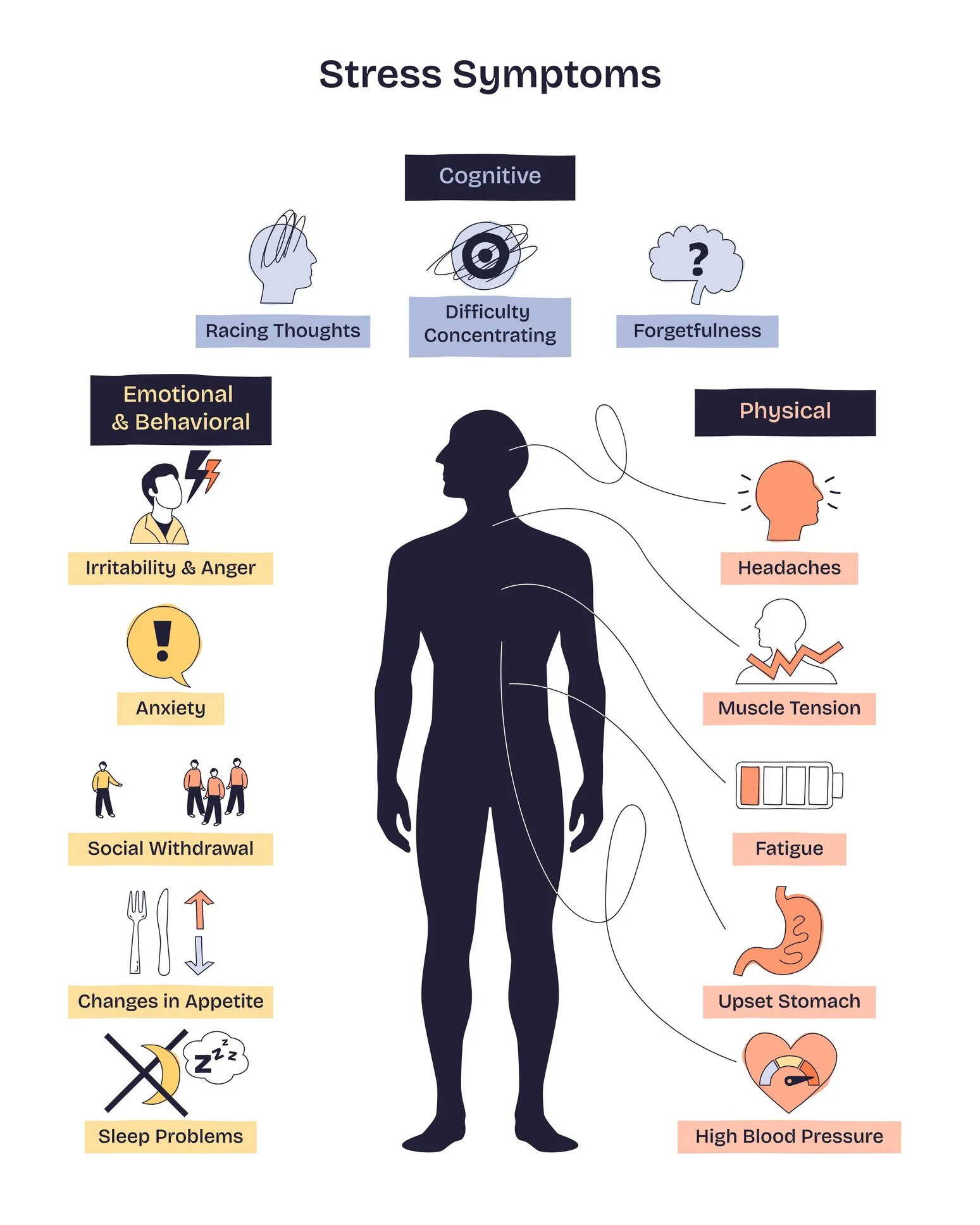
Anxiety can look different for everyone, but common symptoms include:
Excessive worry
Racing thoughts
Difficulty relaxing
Feeling constantly on edge
Panic attacks
Muscle tension
Irritability
Difficulty concentrating
Sleep problems
Digestive discomfort
Avoiding situations because of fear
-
Yes. Long-term stress can contribute to headaches, muscle tension, digestive problems, sleep disturbances, fatigue, elevated blood pressure, and changes in immune function. Therapy can help reduce the impact of chronic stress by teaching practical skills for nervous system regulation and stress management.
-
Absolutely. Anxiety often affects both the mind and body. Many people experience a racing heart, shortness of breath, dizziness, stomach discomfort, muscle tension, trembling, or feeling "keyed up." These symptoms are real and reflect how the nervous system responds to perceived threat.
-
We work with individuals experiencing:
Generalized Anxiety Disorder (GAD)
Panic attacks and panic disorder
Social anxiety
Health anxiety
Perfectionism
Performance anxiety
Stress-related anxiety
Anxiety associated with chronic pain or health conditions
Treatment is always tailored to your unique experiences and goals.
-
Therapy helps you understand the patterns that maintain anxiety while learning new ways to respond to difficult thoughts, emotions, and physical sensations. Together, we'll build practical skills to reduce overwhelm, increase resilience, and help your nervous system become more flexible and responsive.
-
Depending on your needs, treatment may incorporate:
Cognitive Behavioral Therapy (CBT)
Acceptance and Commitment Therapy (ACT)
Mindfulness-Based Cognitive Therapy (MBCT)
Somatic approaches
Nervous system regulation skills
Mindfulness practices
Biofeedback
Psychoeducation
Experiential techniques
Every treatment plan is individualized.
-
Yes. Burnout often develops when chronic stress exceeds your capacity to recover. Therapy can help you identify contributing factors, establish healthier boundaries, reconnect with your values, and develop sustainable strategies for managing stress without sacrificing your well-being.
-
No. While mindfulness can be a valuable tool, it is only one option for treatment. Therapy is tailored to your preferences, goals, and comfort level. If mindfulness is incorporated, it will be introduced gradually and in a way that feels practical and accessible.
-
Yes. Overthinking often develops as the brain's attempt to prevent uncertainty or solve problems. Therapy helps you recognize these patterns, respond differently to anxious thoughts, and spend less time caught in cycles of worry and rumination.
-
Yes. We provide virtual therapy for anxiety and stress for clients in Maryland, Washington, DC, Virginia, and Colorado (North Carolina coming soon), as well as in-person appointments in Bethesda, Maryland.
You may be succeeding at work, caring for your family, and keeping up with life's demands while quietly feeling overwhelmed inside. Many people with anxiety appear to be functioning well on the outside, yet struggle with constant worry, perfectionism, burnout, or the feeling that they can never truly relax. Therapy can help you move beyond simply managing stress and toward feeling more grounded, present, and engaged in your life.