Sleep & Insomnia Therapy
-
Insomnia is more than an occasional restless night. It involves difficulty falling asleep, staying asleep, waking too early, or feeling that your sleep isn't restorative—even when you have enough opportunity to sleep. When sleep difficulties occur several times a week for three months or longer, they are considered chronic insomnia.
-
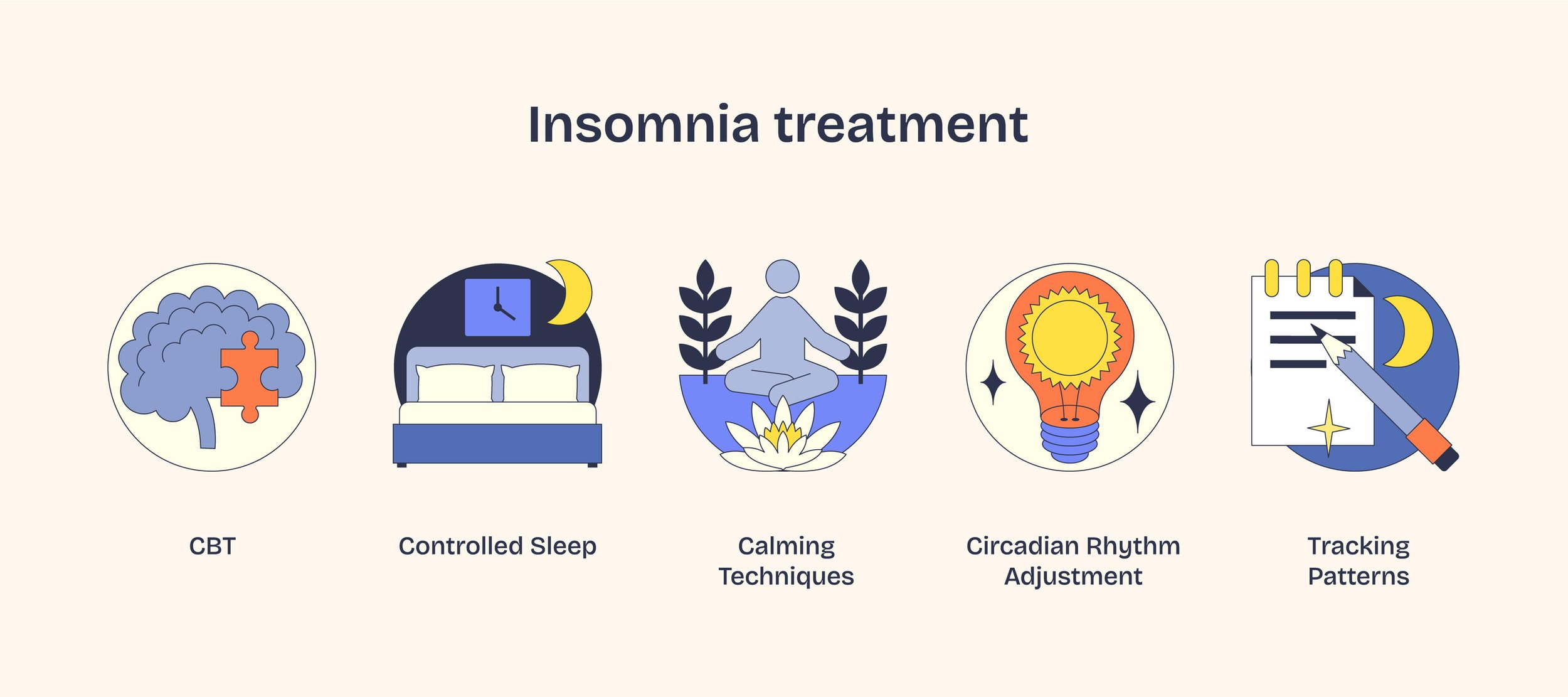
Cognitive Behavioral Therapy for Insomnia (CBT-I) is the gold standard, evidence-based treatment for chronic insomnia. Rather than relying on medication, CBT-I helps identify and change the thoughts, behaviors, and sleep habits that keep insomnia going. Research consistently shows that CBT-I produces long-lasting improvements in sleep for many people.
-
Sleep medications may provide temporary relief, but they typically do not address the underlying factors maintaining insomnia. CBT-I helps retrain your brain and body to sleep more naturally, often leading to lasting improvements that continue after treatment ends. Many people who complete CBT-I reduce or eliminate their reliance on sleep medication under the guidance of their prescribing physician.
-
Yes. Sleep is closely connected to stress, anxiety, mood, physical health, and nervous system regulation. Therapy can help reduce the mental and physiological patterns that interfere with sleep while teaching practical skills that support healthier sleep habits.
-
Most CBT-I treatment lasts between 6 and 8 sessions, although the exact length depends on your individual needs. Many people begin noticing meaningful improvements within the first few weeks as they consistently apply the strategies between sessions.
-
Yes. One of the most important concepts in CBT-I is that insomnia often becomes a learned pattern. After weeks or months of poor sleep, your brain can begin to expect wakefulness at bedtime, making it harder to fall asleep even after the original stressor has resolved. Treatment helps retrain these learned associations.
-
Absolutely. Many people seek treatment after struggling with sleep for years—or even decades. The length of time you've had insomnia does not necessarily predict how well you'll respond to CBT-I. Research has shown that people with long-standing insomnia can still experience significant improvement.
-
Yes. Anxiety, depression, and insomnia frequently occur together. Improving sleep often helps improve mood, concentration, emotional regulation, and resilience. At the same time, addressing anxiety or depression can make it easier for healthy sleep patterns to return.
-
Yes. Poor sleep and chronic pain often reinforce one another. Improving sleep can reduce pain sensitivity, improve daytime functioning, and increase your ability to participate in meaningful activities. If appropriate, CBT-I may also be integrated with Pain Reprocessing Therapy and somatic approaches to address both sleep and persistent pain.
-
Yes. Research has found that CBT-I delivered through telehealth is highly effective and produces outcomes comparable to in-person treatment for many people. Virtual sessions also allow you to complete treatment from the comfort of your own home.
We provide virtual CBT-I therapy for clients located in Maryland, Washington, DC, Virginia, and Colorado (coming soon in North Carolina), as well as in-person appointments in Bethesda, Maryland.
Do you have trouble falling asleep, staying asleep, or waking too early? If you're struggling with chronic insomnia, you're not alone—and effective treatment is available.
Sleep is influenced by the complex interaction of your thoughts, emotions, behaviors, physical health, and nervous system. Using Cognitive Behavioral Therapy for Insomnia (CBT-I), the gold-standard, evidence-based treatment for chronic insomnia, we'll work together to understand what's keeping your sleep difficulties going and help you restore healthier, more restorative sleep.